Digital wellbeing: what it actually means, beyond the buzzwords
It's not app-guided meditation or a weekend detox. It's the difference between using a tool and being used by it.
An honest definition
"Digital wellbeing" has become a marketing label — even the platforms producing the malaise use it. Let's try an operational, measurable definition:
Digital wellbeing is when your technology use matches your intentions.
That's all. If you open TikTok wanting to open TikTok and close it when you meant to, you're fine — even if you spend an hour. If you open it "for a second" and surface 40 minutes later feeling robbed, the problem isn't the hour: it's that you never chose it.
The three pillars
1. Awareness. You can't govern what you can't see. Step one is knowing: how often you unlock, how long you stay, what triggers you. Not to judge yourself — to know yourself.
2. Intention. Every opening should answer one question: "what did I come here to do?". Argine's Quick Actions were born from this: need to answer a DM? Go straight to messages with a 3-minute timer, without crossing the feed.
3. Architecture. Willpower is a depletable resource; your environment isn't. Moving apps off the home screen, killing pushes, putting a gate in front of the vortex apps: structural changes that keep working when you're tired.
What digital wellbeing is NOT
- Not demonizing technology. The problem isn't the screen; it's the attention business model.
- Not the weekend detox. Useful as an experience, useless as a strategy: Monday's environment is identical.
- Not productivity in disguise. Reclaimed time doesn't have to become work. Being bored, staring out the window — that's wellbeing too.
Where to start tonight
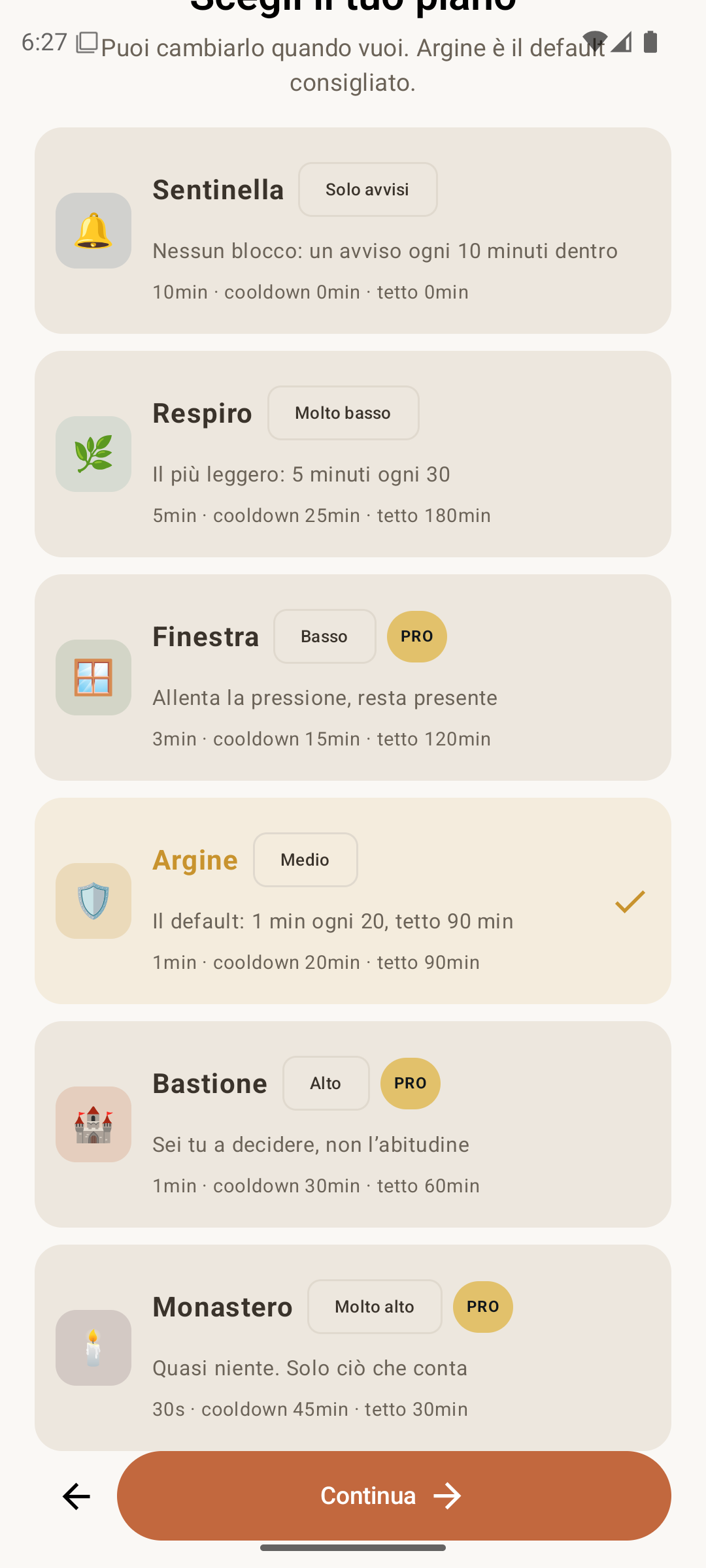
One move: pick the single app that steals the most and put it behind a gate. Not three apps, not a full system: one. Argine's free tier protects up to three, but the real first step is one app on the Breathe plan — 5 minutes every 30. After a week, look at your stats and decide the next step yourself.